Gaga Racing
Choosing a VR headset for sim racing is different from choosing one for general VR gaming. You're seated, looking at a cockpit, reading tiny dashboard numbers at speed. What matters isn't hand tracking or standalone games. it's clarity, connection quality, refresh rate, and long-session comfort.
This guide covers every headset worth considering in 2026 for sim racing, from a €150 used bargain to a €2,300 OLED flagship. All opinions are based on extensive testing and community feedback. Prices on Pimax models update live from 40+ retailers.
Important
For sim racing, a DisplayPort connection matters more than resolution. Wireless/USB headsets (Quest 3) compress the video signal, causing visible artifacts in fast-moving racing scenes. If sim racing is your primary use, prioritize DP headsets.
The Quick Answer
| Budget | Headset | Why |
|---|---|---|
| Trying VR for the first time | HP Reverb G2 (used) | €150, DisplayPort, zero risk |
| All-rounder (VR + flat + standalone) | Meta Quest 3 | €500, wireless, huge library |
| Dedicated sim racer (best value) | Pimax Crystal Light | ~€836, DP, 120Hz, incredible clarity |
| Lightest possible | Bigscreen Beyond 2 | 107g, micro-OLED, perfect blacks |
| Maximum clarity, money no object | Pimax Crystal Super MOLED | €2,330, 3840x3840 OLED |
The Full Comparison
GPU Requirements at a Glance
Before diving in. your GPU determines which headset you can actually run. No point buying a Crystal Super with a RTX 3060.
| GPU Tier | Headsets You Can Run |
|---|---|
| RTX 3070 / 4060 Ti | HP Reverb G2 |
| RTX 3080 / 4070 | Meta Quest 3, Pico 4 |
| RTX 3080+ / 4070 Ti | Pimax Crystal Light, Bigscreen Beyond 2, Dream Air SE |
| RTX 4080 / 5080 | Pimax Crystal Super (comfortable) |
| RTX 4090 / 5090 | Pimax Crystal Super (maxed out), Crystal Super MOLED |
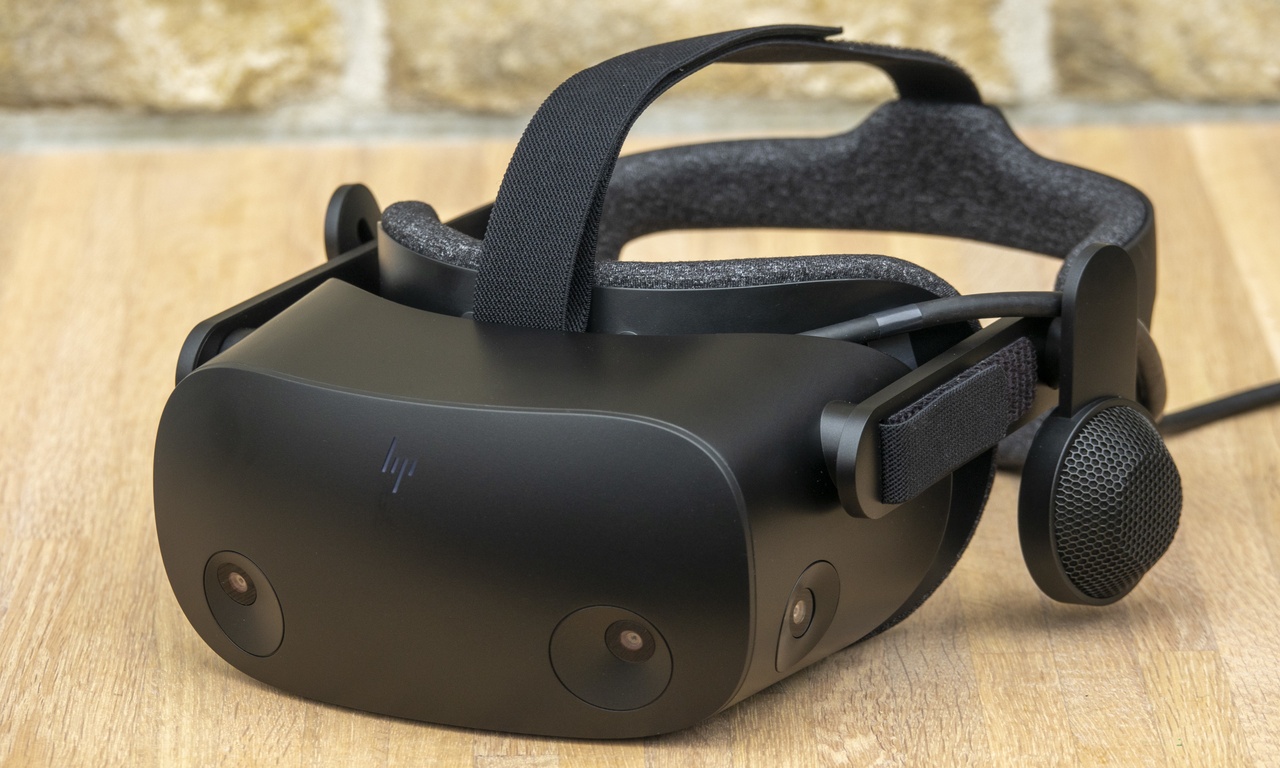
Budget Entry. HP Reverb G2 (~€150 used)
Yes, a headset from 2020. And yes, still worth recommending in 2026. but only for one specific audience: people who've never tried VR and want to test sim racing in VR with minimal financial risk.
| Spec | Value |
|---|---|
| Resolution | 2160 x 2160 / eye |
| Refresh Rate | 90 Hz |
| FOV | ~98° (feels narrow) |
| Weight | ~500g |
| Connection | DisplayPort (native, no compression) |
| Lenses | Fresnel (glare, small sweet spot) |
| Price | €100-200 used |
The Reverb G2 was officially discontinued and Windows Mixed Reality is dead. But the community-built Oasis driver brought it back to life on Windows 11. For sim racing (seated, forward-facing), the controller tracking limitations don't matter at all.
The comfort is genuinely excellent. one of the best of any headset ever made. The Valve-designed speakers are great. And the DisplayPort connection means zero compression, zero latency.
The downsides are real: fresnel lenses create glare halos, the sweet spot is small (you need to keep your gaze centered), and the resolution feels dated compared to modern headsets. But for €150? It's an incredible way to discover if VR sim racing is for you.
Best for: First-time VR buyers on a tight budget. Try it, love it, upgrade later. Skip if: You already own a VR headset. The jump to Crystal Light will blow your mind.
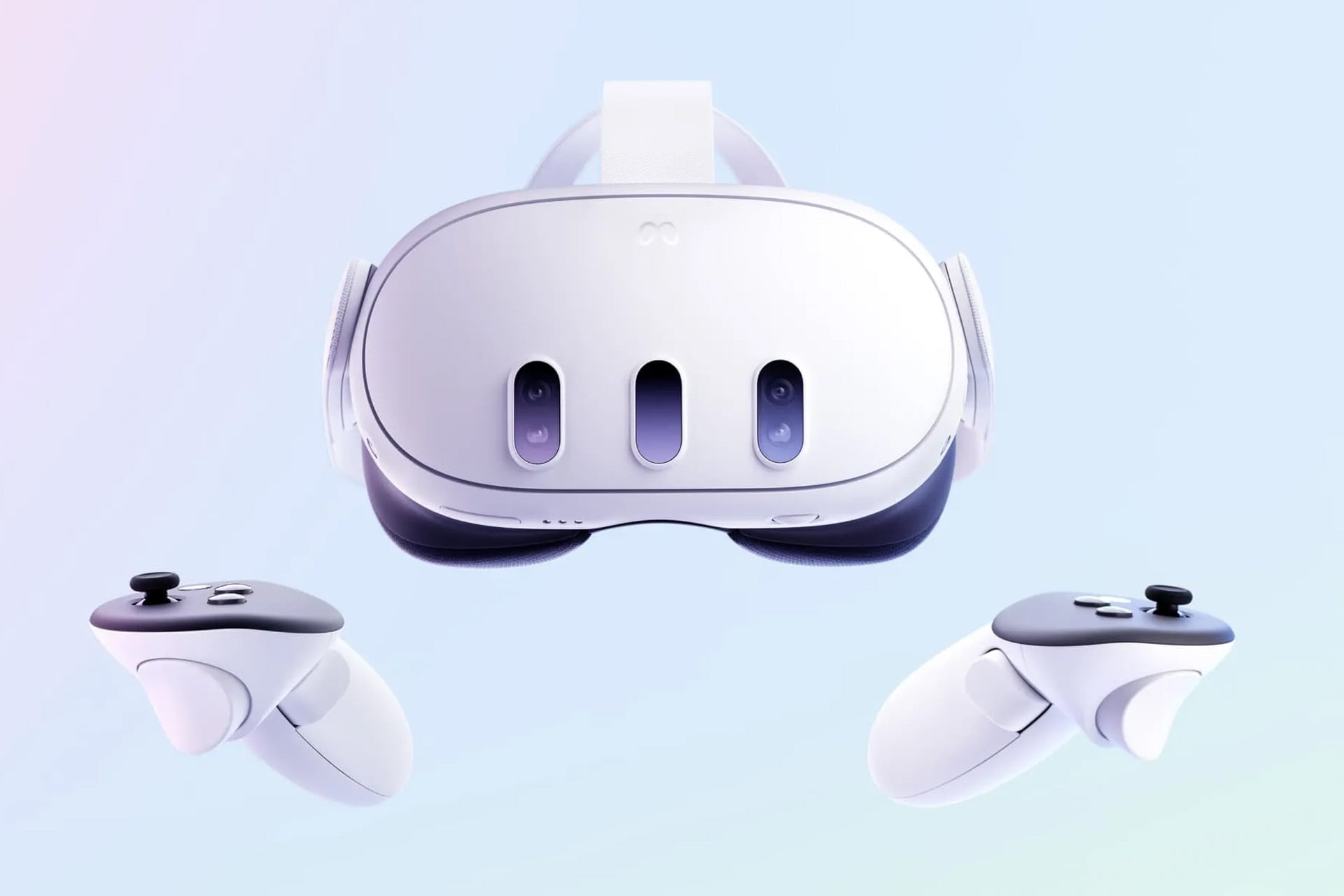
Mid-Range All-Rounder. Meta Quest 3 (~€550)
| Spec | Value |
|---|---|
| Resolution | 2064 x 2208 / eye |
| Refresh Rate | 120 Hz |
| FOV | ~108° |
| Weight | 515g |
| Connection | USB-C / WiFi (NO DisplayPort) |
| Lenses | Pancake Gen 2 (best in class, 100% sweet spot) |
| Price | ~€500 + ~€100 for custom strap + face interface |
The Quest 3 is the most versatile VR headset on the market. Standalone games, wireless PCVR, flat game streaming, media consumption. it does everything. The pancake lenses are genuinely the best available, with a sweet spot that covers essentially 100% of the lens. No adjusting, no fiddling.
But for sim racing specifically, it has a real problem: no DisplayPort.
The video signal goes through USB or WiFi, which means compression. In everyday VR, you don't notice it. In sim racing, where the scenery flies past at 200km/h, you'll see compression artifacts. smearing, tearing, loss of detail in fast-moving backgrounds. Virtual Desktop and Steam Link have improved a lot, but the physics of compression remain.
Battery life is also a concern for wireless use. expect 2-2.5 hours before needing to plug in mid-race. The default strap is terrible (budget €40-50 for a replacement). And the LCD panels mean mediocre blacks compared to OLED.
Best for: People who want one headset for everything. sim racing, Beat Saber, social VR, media. Skip if: Sim racing is your primary use. For the same budget range, the Pimax Crystal Light is a massive upgrade.
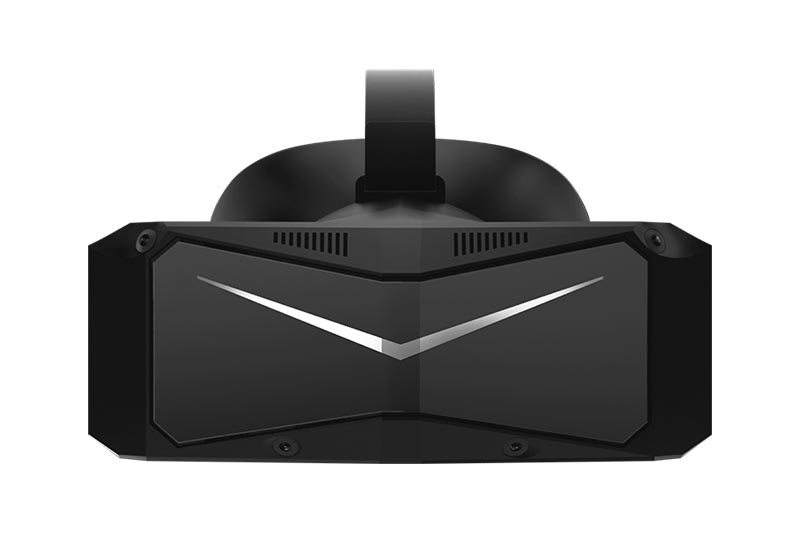
The Sim Racing Sweet Spot. Pimax Crystal Light (~€836)
| Spec | Value |
|---|---|
| Resolution | 2880 x 2880 / eye |
| Refresh Rate | 72 / 90 / 120 Hz |
| FOV | ~110° horizontal |
| Weight | ~270g (headset only) |
| Connection | DisplayPort (native) |
| Lenses | Glass aspheric (large sweet spot) |
| Panels | QLED + mini-LED with local dimming |
| Tracking | Inside-out cameras (no Lighthouse needed) |
| Price | ~€836 |
This is the recommendation for dedicated sim racers. The clarity jump from a Quest 3 to a Crystal Light is immediately obvious. you can read every dashboard number, every track-side sign, every tiny detail in the cockpit. The 2880x2880 resolution with glass aspheric lenses produces an image that's sharp across the entire lens, not just the center.
The local dimming on the mini-LED backlight gives surprisingly deep blacks for an LCD panel. not OLED-level, but far better than the Quest 3. Night racing looks genuinely good.
PIMax Play software has matured significantly. Per-game profiles, sharpness boost, upscaling, FPS locking at half refresh rate (great for demanding sims like Flight Simulator), solid reprojection. It's stable and intuitive. a far cry from the buggy early Pimax software.
120Hz makes a real difference in sim racing. But you can also run 72Hz with reprojection for visually demanding sims, pushing graphics settings higher at the cost of raw framerate.
Inside-out tracking means no Lighthouse base stations needed. just plug in the DisplayPort cable and go. Optional Lighthouse faceplate available if you want better precision.
The downsides: it's bulky (not for standing VR), the built-in audio is poor (get the DMAS addon or use your own headphones), and you need a decent GPU. But for seated sim racing, none of these matter much.
Best for: Anyone who primarily sim races and wants the best value. This is it.
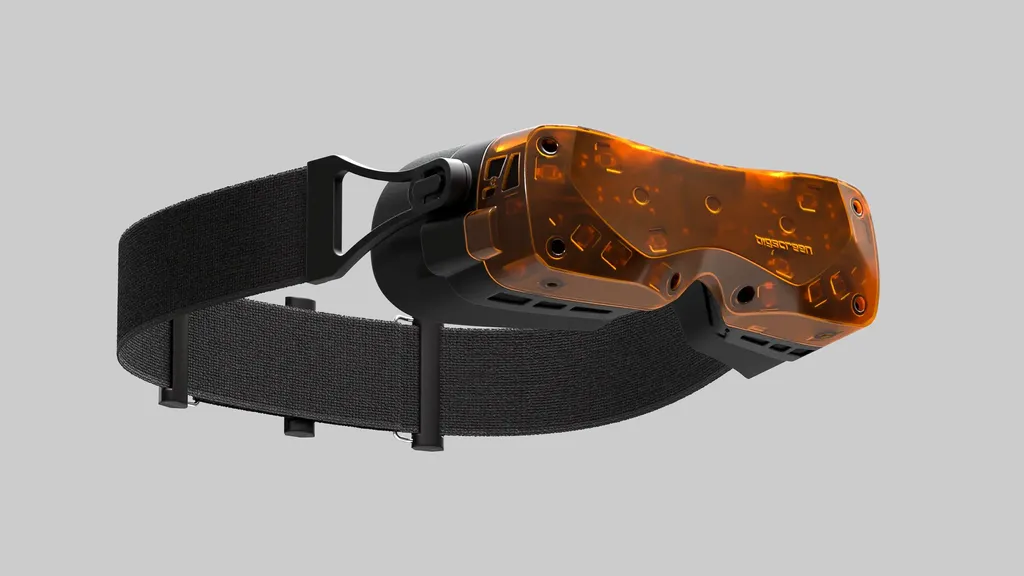
Ultralight Premium. Bigscreen Beyond 2 (~€1,019+)
| Spec | Value |
|---|---|
| Resolution | 2560 x 2560 / eye |
| Refresh Rate | 90 Hz |
| FOV | ~108° horizontal |
| Weight | 107g (headset only!) |
| Connection | DisplayPort (native) |
| Panels | Micro-OLED |
| Tracking | Requires Lighthouse base stations |
| Price | Starting ~€1,019 (total with Lighthouses: ~€1,600+) |
107 grams. That's lighter than a smartphone. You genuinely forget you're wearing it. For long endurance races. 2, 3, 4 hour stints. the weight advantage is massive. And on motion rigs where headset shift is a constant annoyance, the Beyond 2 is in a league of its own.
The micro-OLED panels deliver perfect blacks and vibrant colors. Night racing, dark cockpits, tunnel sections. everything looks stunning. Edge-to-edge clarity is excellent, and you can glance at dashboard readouts with your eyes instead of turning your head.
But the cost adds up fast. The headset alone starts at €1,019, but you need Lighthouse base stations (~€200-300), and the custom face interface (3D scanned with an iPhone) means nobody else can use your headset. No built-in audio either. you'll need to add your own solution. Total investment easily reaches €1,500-1,700.
Some users report eye fatigue after 1-2 hours. a consequence of the very small form factor and lens distance. The 90Hz cap is also a step below the Crystal Light's 120Hz option. And the binocular overlap isn't great, reducing the sense of 3D depth.
Best for: Motion rig users, endurance racers, and anyone who values weight above all else. Skip if: Budget-conscious. The Crystal Light gives you 120Hz, better software, and no Lighthouse requirement for half the total cost.
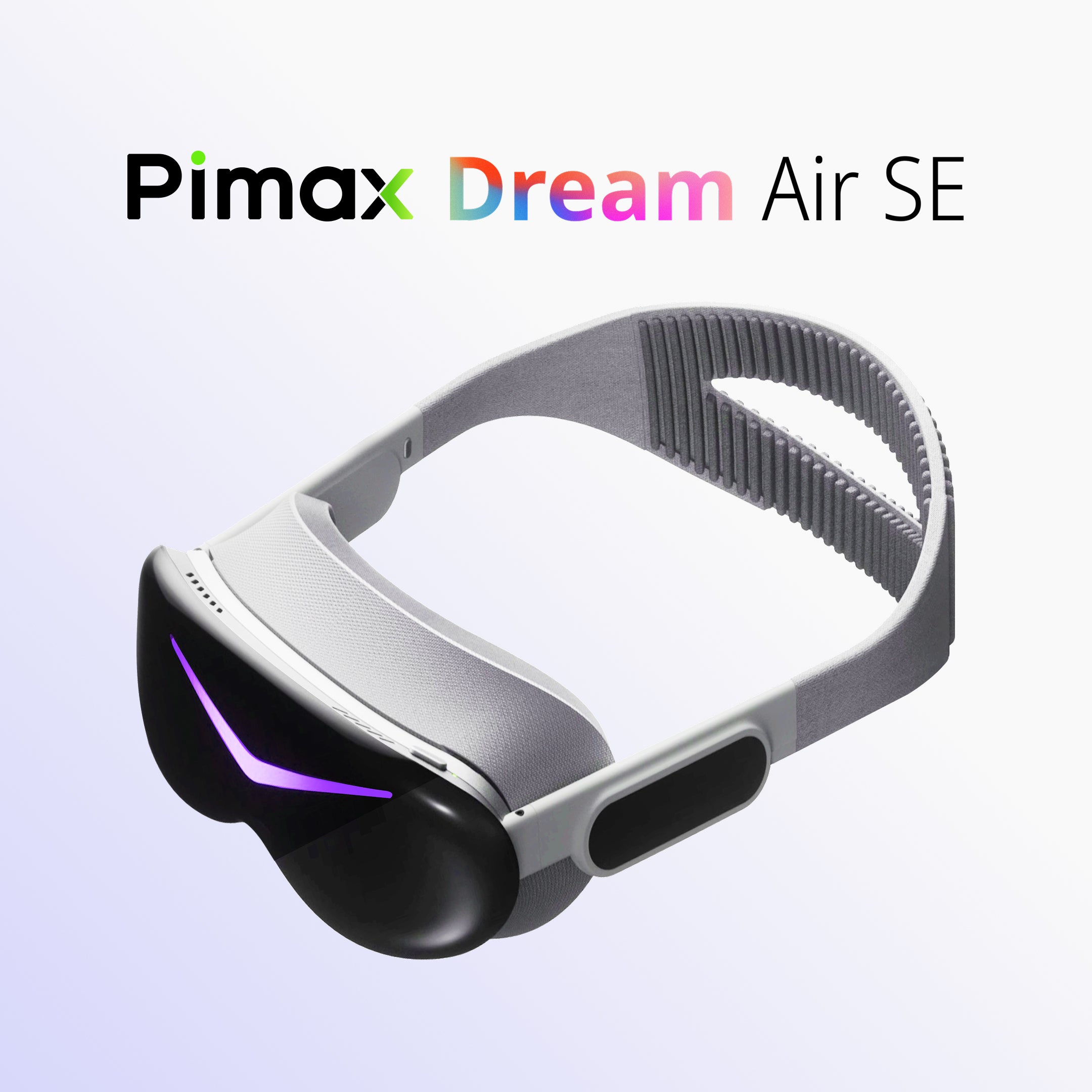
Coming Soon. Pimax Dream Air SE (~€954)
| Spec | Value |
|---|---|
| Resolution | 2560 x 2560 / eye |
| Refresh Rate | 90 Hz |
| FOV | ~105° |
| Weight | ~150g |
| Connection | DisplayPort |
| Panels | Sony micro-OLED |
| Tracking | SLAM (built-in) + optional Lighthouse |
| Price | ~€954 |
The Dream Air SE could be the headset that makes the Bigscreen Beyond 2 irrelevant. Same Sony micro-OLED panels, similar resolution, similar weight class. but with built-in SLAM tracking (no Lighthouse needed), eye tracking with foveated rendering, built-in spatial audio, and PIMax Play software support.
All of that for ~€954, compared to the Beyond 2's €1,500+ total cost.
Important
This headset is NOT yet released. Expected early 2026. Do NOT pre-order. wait for real reviews. The specs look incredible but we need hands-on testing to confirm.
If it delivers on its promises, this becomes the new recommendation for sim racers who want micro-OLED quality without the Bigscreen Beyond 2's accessory tax.

Ultra Premium. Pimax Crystal Super (~€1,889)
| Spec | Value |
|---|---|
| Resolution | 3840 x 3840 / eye |
| Refresh Rate | 90 Hz |
| FOV | 120-135° (module dependent) |
| Weight | ~340g |
| Connection | DisplayPort |
| Panels | LCD + local dimming (OLED module available) |
| Tracking | Inside-out + optional Lighthouse |
| Price | ~€1,889 (LCD) / ~€2,330 (MOLED) |
30 million pixels. The sharpest consumer VR display ever made. If you have a RTX 4090 or 5090, this headset will show you details you didn't know existed in your sim.
The modular system lets you swap between LCD modules (wider FOV, lower cost) and the Micro-OLED module (perfect blacks, slightly narrower FOV). The 50 PPD module at 135° FOV is the immersion king. The MOLED module at 116° with 53 PPD is the clarity king.
But there are real trade-offs. 90Hz maximum. no 120Hz option, which matters in sim racing. Setup is more complex than the Crystal Light. The GPU requirement is brutal. you genuinely need a RTX 4090 to take full advantage. And the price premium over the Crystal Light is hard to justify for most people.
The Crystal Super MOLED at €2,330 is the absolute pinnacle. perfect OLED blacks combined with the highest resolution available. If money and GPU power are no concern, it's the best VR image you can see today.
Best for: Clarity obsessives with RTX 4090/5090. The "money is no object" choice. Skip if: You have anything less than a RTX 4080. You won't be able to run it properly.
Live Specs Comparison
All VR headsets in our database, compared interactively. resolution, price, FOV:
NOT Recommended for Sim Racing
| Headset | Why Not |
|---|---|
| Meta Quest 3S | Resolution too low for cockpit detail reading |
| Apple Vision Pro | €3,500, uncomfortable, no VR racing ecosystem |
| Varjo Aero / XR4 | Professional pricing (€3,000+), overkill for sim racing |
| Somnium VR1 | €4,300, too heavy, terrible front weight distribution |
| Pico 4 / 4 Ultra | Worse lenses than Quest 3, smaller ecosystem, no advantage for sim |
The Decision Framework
Do you already own a VR headset?
├── No → Are you sure VR is for you?
│   ├── Not sure → HP Reverb G2 used (€150, zero risk)
│   └── Yes → What's your budget?
│       ├── < €600 → Meta Quest 3 (if you want wireless + standalone)
│       ├── €600-1000 → Pimax Crystal Light (THE sim racing pick)
│       └── > €1000 → Crystal Super or wait for Dream Air SE
│
└── Yes → What's your GPU?
    ├── RTX 3070-3080 → Crystal Light at 90Hz
    ├── RTX 4070-4080 → Crystal Light at 120Hz
    └── RTX 4090/5090 → Crystal Super or Crystal Super MOLED
Final Verdict
For sim racing in 2026, the Pimax Crystal Light at ~€836 is the clear winner for value. It's the sweet spot where clarity, refresh rate, software maturity, and price converge. Everything below it compromises on image quality or connection type. Everything above it gives diminishing returns at exponentially higher prices.
If you've never tried VR, grab a used HP Reverb G2 for €150 and discover what you've been missing. If money is no object, the Crystal Super MOLED will show you what VR can really look like.
And keep an eye on the Pimax Dream Air SE. if it delivers, it could redefine the mid-premium segment in 2026.
Non sai quale scegliere?Il quiz ti consiglia la build ideale in 2 minutiDomande frequenti
#vr#pimax#quest-3#sim-racing#headset#crystal-light#crystal-super#bigscreen-beyond
Vuoi leggere altro?
Guide, confronti e promo sim racing.