 Gaga Racing
Pimax makes the widest and sharpest VR headsets you can buy for sim racing. That's not marketing — it's measurable. Their Crystal Super hits 135° FOV and 50 pixels per degree, numbers no other consumer headset matches. But that visual quality comes with trade-offs: high GPU requirements, software that needs tweaking, and prices starting around €836.
This guide breaks down every current Pimax headset using real specifications from our database, explains what each spec means for your sim racing experience, and helps you pick the right one for your setup and budget.
Promo code: Use code gaga at checkout on pimax.com for 3% off all Pimax gear.
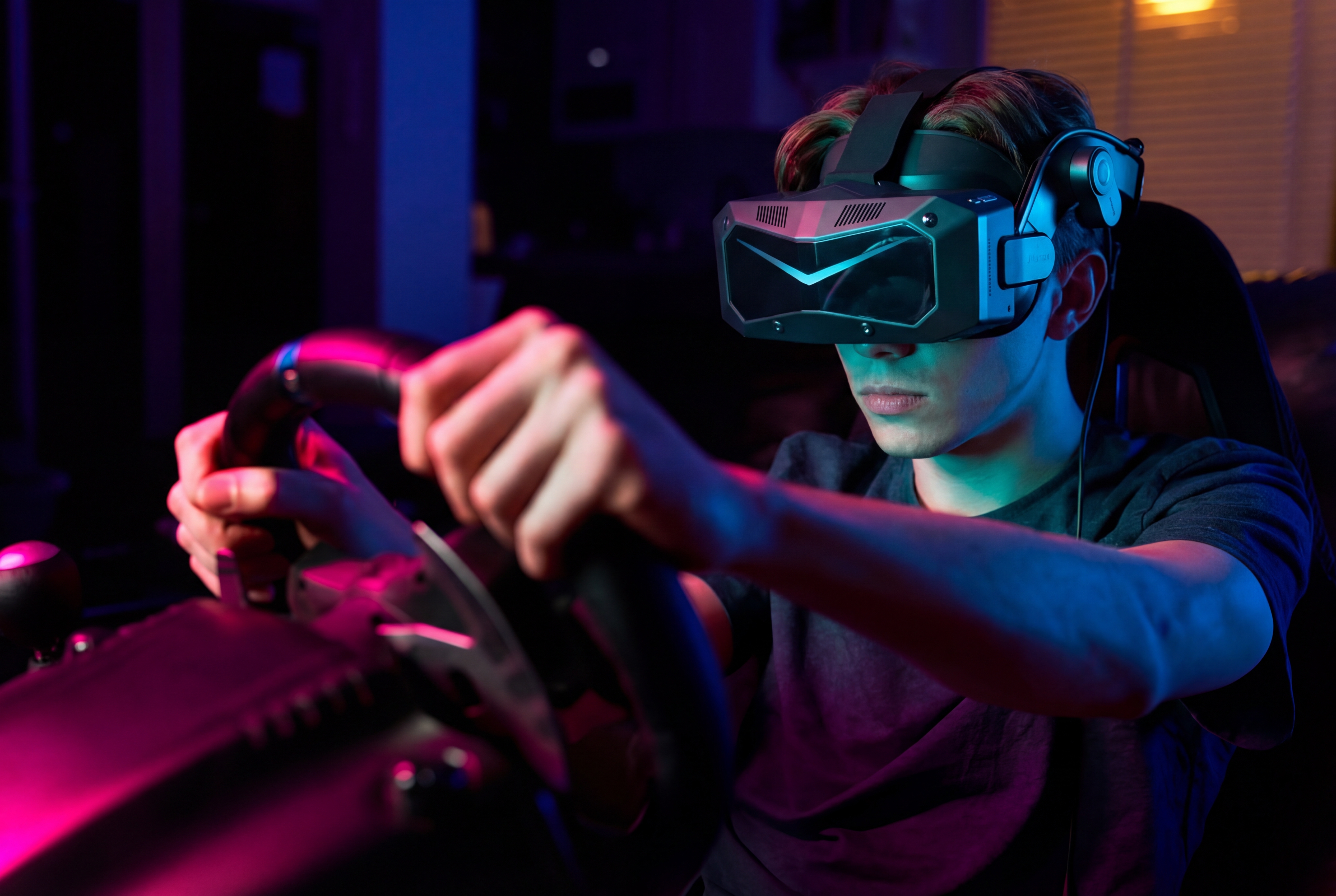
Why Pimax for Sim Racing?
Three specs matter most for sim racing VR: field of view (peripheral vision for reading mirrors and apex entries), pixels per degree (clarity at distance for braking markers and car numbers), and refresh rate (smooth head tracking at speed).
Pimax's canted display design tilts the outer edges of each panel outward, creating peripheral coverage that no flat-panel headset can match. The result: you can check mirrors by turning your head naturally, spot cars alongside you, and read track features earlier.
The Crystal Super adds interchangeable optical engines — four physically swappable display configurations. No other headset offers this. You can optimize for clarity one day and FOV the next without buying a new headset.
The honest trade-off: Pimax headsets require a powerful PC (RTX 4070 Ti minimum, RTX 4090 recommended for Crystal Super), more setup time than a Quest 3, and patience with Pimax Play software. If you want plug-and-play VR, look elsewhere. If you want the best visual clarity available, keep reading.
Every Pimax Headset Compared
Here's every current Pimax headset with real specifications from our product database. All prices are tracked in real-time across multiple retailers on Build My Rig.
Specification Comparison
| Crystal Light | Dream Air SE | Crystal Super 50PPD | Crystal Super 57PPD | Dream Air | Crystal Super 8K Micro-OLED | |
|---|---|---|---|---|---|---|
| Price | from ~€836 | from ~€954 | from €1,775 | from €1,889 | from €2,124 | from ~€2,290 |
| Resolution/eye | 2880×2880 | 2560×2560 | 3840×3840 | 3840×3840 | 3840×3552 | 3840×3552 |
| Total resolution | 5760×2880 | 5120×2560 | 7680×3840 | 7680×3840 | 7680×3552 | 7680×3552 |
| Display type | QLED | Micro-OLED | QLED | QLED | Micro-OLED | Micro-OLED |
| FOV | 115° | 102° | 135° | 120° | 110° | 116° |
| PPD | 35 | ~42 | 50 | 57 | 53 | ~35 |
| Refresh rate | 120 Hz | 90 Hz | 90 Hz | 90 Hz | 90 Hz | 90 Hz |
| Eye tracking | No | Yes | Yes | Yes | Yes | Yes |
| Weight | 815 g | 150 g | 966 g | 966 g | 170 g | 600 g |
| Interchangeable optics | No | No | Yes | Yes | No | Yes |
What the Specs Mean for Sim Racing
FOV 135° vs 115° vs 102°: At 135° (Crystal Super 50PPD), you get genuine peripheral vision — mirrors are visible without turning your head far, cars alongside are detected naturally. At 102° (Dream Air SE), peripheral vision becomes noticeably limited. For wheel-to-wheel racing (iRacing, ACC), FOV matters enormously.
PPD 57 vs 50 vs 35: Pixels per degree directly determines how far you can read track details. At 57 PPD (Crystal Super), braking markers are sharp at 200+ meters. At 35 PPD (Crystal Light), you'll need to be closer before they're crisp. For endurance racing where early braking references matter, higher PPD = faster laps.
120 Hz vs 90 Hz: The Crystal Light's 120 Hz refresh rate gives slightly smoother head tracking in fast chicanes. The 30 Hz difference is noticeable if you're coming from a high-refresh monitor, but most sim racers adapt quickly to 90 Hz.
Weight 150 g vs 966 g: For long stints (24h of Le Mans, endurance leagues), weight matters. The Dream Air at 170 g and Dream Air SE at 150 g are in a different category entirely from the Crystal Super's nearly 1 kg. If your sessions regularly exceed 2 hours, factor this in.
Eye tracking: Enables Dynamic Foveated Rendering — the headset renders full resolution only where you're looking, reducing GPU load by ~30%. Essential for Crystal Super at native resolution. The Crystal Light lacks this, so you need more raw GPU power.
Product Details
Pimax Crystal Light — Best Entry Point

The Crystal Light (from ~€836) is where most sim racers should start with Pimax. Resolution of 2880×2880 per eye at 35 PPD delivers noticeably sharper visuals than a Quest 3, and the 115° FOV provides decent peripheral coverage. The 120 Hz refresh rate is actually the highest in the Pimax lineup.
Best for: Sim racers upgrading from Quest 3 or first-time PCVR buyers who want premium visuals without the Crystal Super price tag. Dedicated rig setups where the headset stays mounted.
Limitations: No eye tracking means no foveated rendering — your GPU does all the work. No interchangeable optics. Wired only (DisplayPort + USB 3.0) — make sure your GPU has a free DisplayPort output.
Pimax Dream Air SE — The Lightweight Bet
At 150 grams, the Dream Air SE weighs less than a smartphone. Same €899 price range as the Crystal Light but with Micro-OLED display (deeper blacks for night racing) and eye tracking included. The trade-off: 102° FOV is the narrowest in the lineup, and it shipped to first customers in late 2025 — long-term community feedback is still limited.
Best for: Long-session endurance racers who prioritize comfort over FOV. Early adopters willing to bet on pancake lens technology.
Limitations: Still a recent product (limited long-term reviews), narrowest FOV in the lineup, lower resolution than Crystal Light.
Pimax Crystal Super (50 PPD) — The Sweet Spot
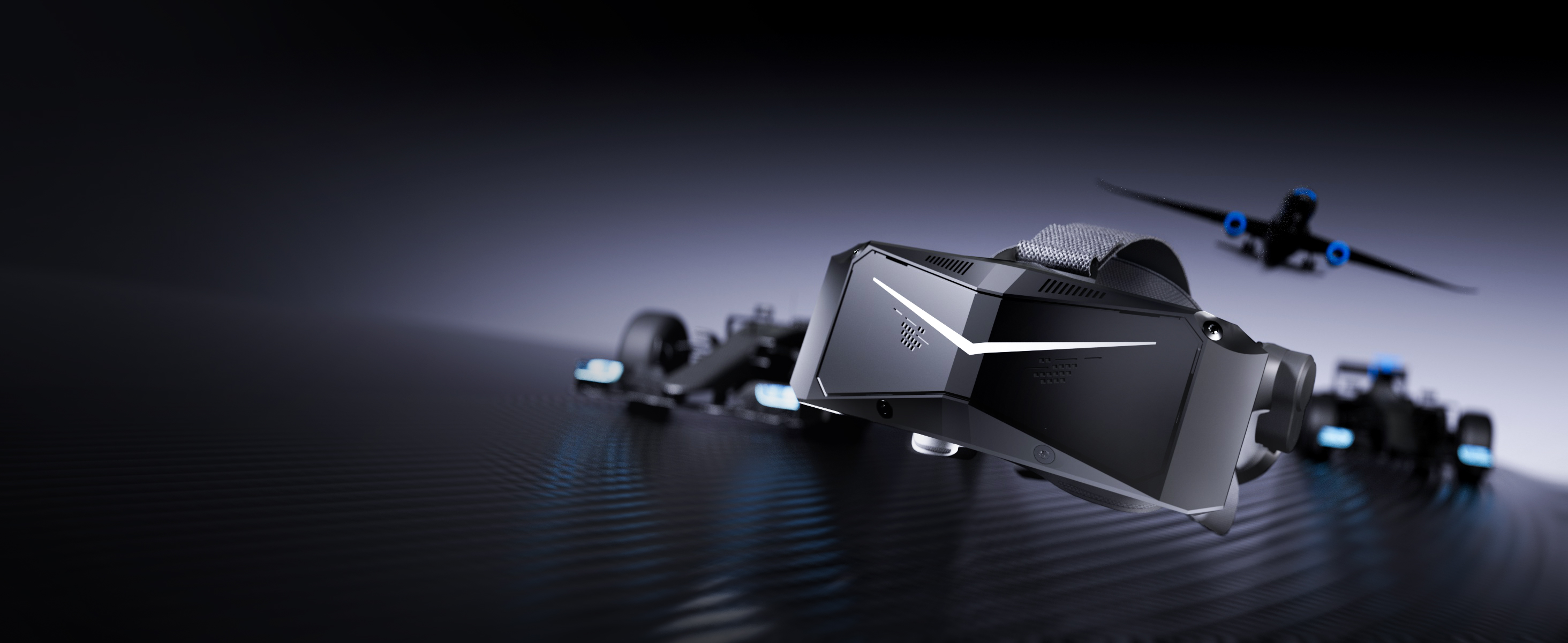
The Crystal Super with the QLED 50PPD engine is the headset most sim racing reviewers have praised. 135° FOV delivers genuine peripheral vision — the widest in any consumer headset. 50 PPD clarity is excellent for reading braking markers at distance. And the interchangeable optics system means you can swap to the 57PPD engine or Micro-OLED later.
Best for: Serious sim racers who want the widest FOV possible. Competitive drivers where peripheral awareness wins races.
Limitations: 966 g (nearly 1 kg) — heavy for long sessions. Requires RTX 4080 minimum. 90 Hz only.
Pimax Crystal Super (57 PPD) — Maximum Clarity
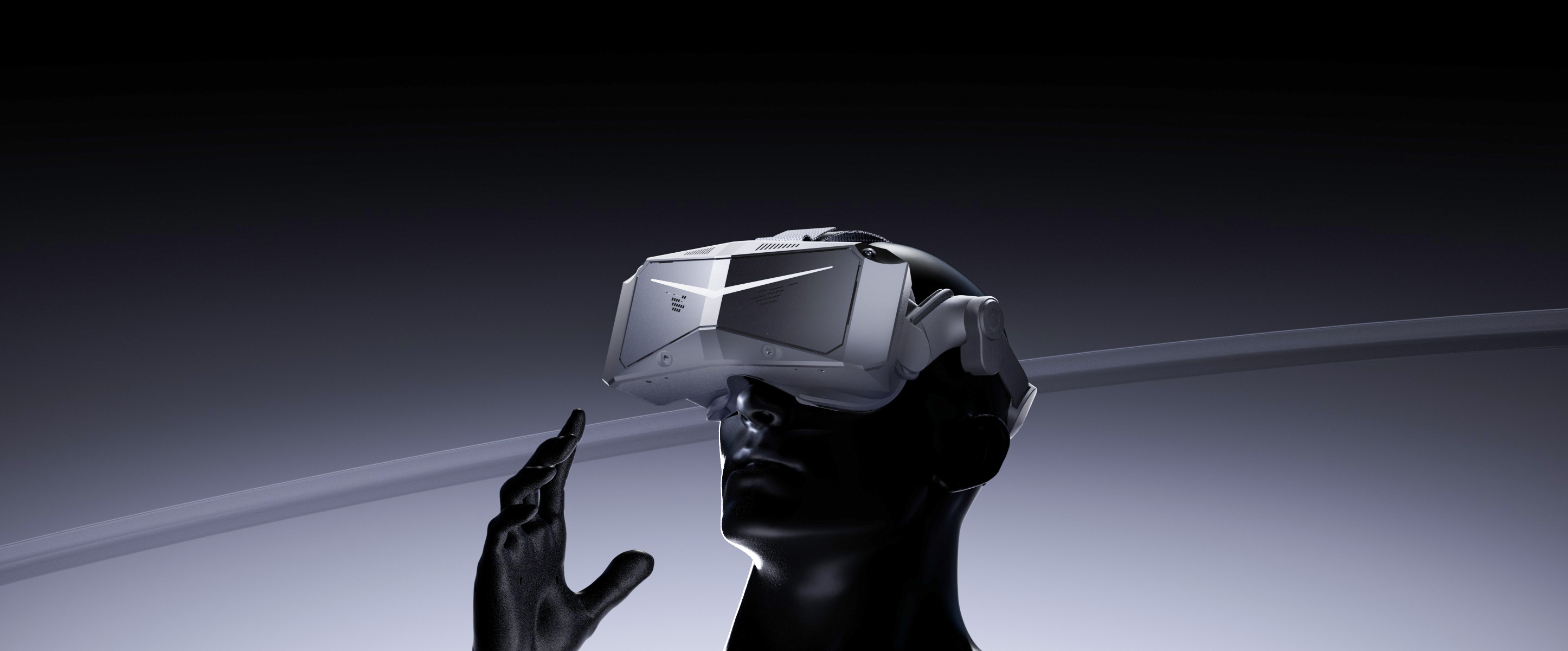
Same headset as the 50PPD but with the narrow-FOV engine that pushes pixel density to 57 PPD — the sharpest in any consumer headset. FOV drops to 120° (still wider than most competitors). SimRacing Arnout (YouTube reviewer) after 200 hours of testing: "Completely different."
Best for: Endurance racers and time trialists who read distant track features early. Drivers coming from high-resolution monitors.
Limitations: Narrower FOV than the 50PPD engine. Same weight and GPU requirements.
Pimax Dream Air — The Premium Lightweight
ConcaveView pancake lens technology in a 170 g package. 3840×3552 per eye with Micro-OLED means stunning contrast and deep blacks. 110° FOV sits between Crystal Light and Crystal Super.
Best for: Sim racers who do 3+ hour sessions regularly and need lightweight comfort with premium visuals.
Limitations: ~€2,124 puts it close to Crystal Super territory without interchangeable optics. Newer product with less community validation.
Pimax Crystal Super 8K Micro-OLED — Night Racing King
Sony Micro-OLED panels (3840×3552 per eye, marketed as "8K" for combined resolution) deliver the deepest blacks and highest contrast in the lineup. Night racing on Le Mans, Spa, or Bathurst becomes genuinely immersive. At 600 g, it's significantly lighter than the QLED Crystal Super engines.
Best for: Night racing enthusiasts, endurance racers, anyone who values contrast and black levels over raw FOV.
Limitations: 116° FOV is narrower than the QLED engines. €2,300+ pricing.
Buying by Budget
~€836–€954 — Crystal Light or Dream Air SE
The Crystal Light is the proven choice. Months of community testing, unanimous positive reviews for sim racing, and immediate availability. The Dream Air SE is the wild card — slightly higher-priced, lighter, Micro-OLED, but still in pre-order.
Our pick: Crystal Light for immediate sim racing. Wait for Dream Air SE reviews if comfort is your top priority.
€1,775–€2,124 — Crystal Super QLED or Dream Air
The Crystal Super 50PPD from ~€1,775 introduces interchangeable optics — a unique feature that no competitor offers. The Dream Air at ~€2,124 trades modularity for 170 g weight. For competitive sim racing where peripheral vision wins races, the Crystal Super QLED is the better investment.
€2,300–€2,700 — Crystal Super Micro-OLED or Golden Bundle
The 8K Micro-OLED engine delivers the ultimate visual experience for night racing. The Golden Bundle at ~€2,699 includes both QLED and Micro-OLED engines — QLED for day racing, Micro-OLED for night. If you're spending €2,300, the extra €400 for the bundle is worth it.
GPU Requirements
| Headset | Minimum GPU | Recommended GPU | With Foveated Rendering |
|---|---|---|---|
| Crystal Light | RTX 4070 Ti | RTX 4080 | N/A (no eye tracking) |
| Dream Air SE | RTX 4070 | RTX 4070 Ti | RTX 4060 Ti |
| Crystal Super (QLED) | RTX 4080 | RTX 4090 | RTX 4070 Ti |
| Crystal Super (Micro-OLED) | RTX 4080 | RTX 5090 | RTX 4080 |
| Dream Air | RTX 4070 Ti | RTX 4080 | RTX 4070 |
Foveated rendering (eye tracking) reduces GPU load by approximately 30% by only rendering full resolution where your eyes are looking. It's available on every Pimax headset except the Crystal Light. For Crystal Super at native resolution, it's essentially mandatory unless you have a 4090/5090.
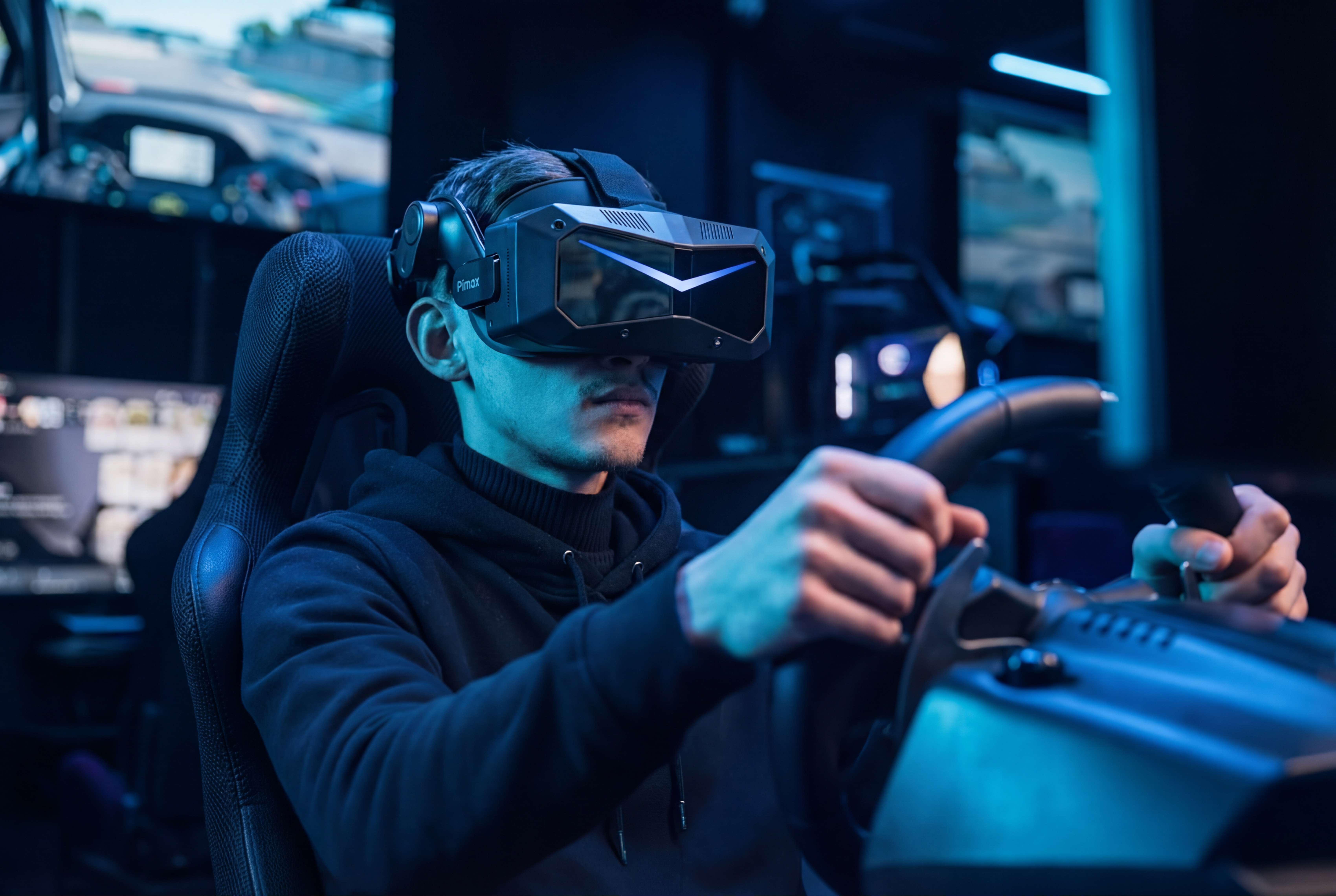
Pimax vs Quest 3 for Sim Racing
The Meta Quest 3 at ~€500 is the most common entry point for VR sim racing. Here's how the cheapest Pimax (Crystal Light, from ~€836) compares:
| Quest 3 | Crystal Light | |
|---|---|---|
| Resolution/eye | 2064×2208 | 2880×2880 |
| FOV | ~104° | 115° |
| PPD | ~22 | 35 |
| Refresh rate | 120 Hz | 120 Hz |
| Weight | 515 g | 815 g |
| Standalone | Yes | No (PC required) |
| Price | ~€500 | from ~€836 |
The Crystal Light delivers ~60% more pixels per degree and 10% wider FOV. In practice, that means sharper braking markers, clearer dashboard text, and better peripheral awareness. The Quest 3 wins on weight, standalone capability, and price. If your PC can handle it and you have a dedicated rig, the Crystal Light is the better sim racing experience.
Summary
- Best overall for sim racing: Crystal Super 50PPD — widest FOV (135°), interchangeable optics, community-proven
- Best value entry: Crystal Light — from ~€836, proven, 120 Hz, sharp enough for most drivers
- Best for long sessions: Dream Air — 170 g, Micro-OLED, eye tracking
- Best for night racing: Crystal Super 8K Micro-OLED — Sony panels, deepest blacks
- Best potential value: Dream Air SE — from ~€954, 150 g, Micro-OLED, early community feedback only
All Pimax headsets with real-time price tracking across multiple retailers are available on Build My Rig.
Further Reading
- Best Sim Racing Setup Under 500€ — start here if you need the full hardware setup
- Best Sim Racing Setup 1000-2000€ — pair your Pimax with a premium direct drive setup
- Best Sim Racing Pedals 2026 — complete your rig Use code gaga on pimax.com for 3% off.
Frequently asked questions
#pimax#vr#crystal super#crystal light#dream air#buying guide#sim racing
Want more?
Guides, comparisons and sim racing deals.